Info

You are currently browsing the archives for the IN affects Great Lakes category.

Calendar
May 2012
M T W T F S S
« Mar    
 123456
78910111213
14151617181920
21222324252627
28293031  

Archive for the IN affects Great Lakes Category

HEC’s Environmental Policy for Waterways in 2011

Hoosier Environmental Council 2011-2012 Legislative Policy Guide

http://www.hecweb.org/wp-content/uploads/2010/12/2011LegGuide10-3.pdf

According to the 2010 Impaired Waters List, Indiana has more than 2,600 impaired waters that are unsafe for drinking and recreation.

The following is a summary of information presented in the guide regarding water issues:

Issue 1) Restriction unnecessary use of phosphorus in lawn fertilizers on turf grass unless it is TRULY needed.  This is the first issue discussed because lawn fertilizer has been linked to “dead zones” in Lake Erie, where over 50% of our fish from the Great Lakes come from! (pg 4)

Issue 2) The Clean Water Act’s Anti-Degradation Policy was adopted by the Indiana General Assembly, but IDEM’s proposed rules do not meet this standard and must be improved.  Too many exemptions allow companies to avoid justifying their new or increased discharges.  There are several weaknesses in proposed rule so it needs to be strengthened. (pg 4)

Issue 3) Confined Feeding Animal Operations (CAFO’s) in Indiana number over 3,000.  At 80% of these operations; hogs and dairy cows are confined by the thousands or chickens are raised by tens of thousands at a single facility.   These large scale operations lead to public health disasters like fish kills, and Salmonella tainted eggs, blue-green algae blooms. The waste from these animals contain pathogens and medications that contaminate our waterways as well as food crops.  Traditionally, animal waste is used to fertilize crops but at this magnitude land application is dictated by the need to get rid of the waste rather than necessary fertilizer.  HEC believes that little is being done to effectively regulate the industry.
(pg 5)

Issue 4) Financial Assurance to Indiana Taxpayers. One example happened in 2009 - in Muncie, Indiana.  4-5 million gallons of manure was released and the State of Indiana paid the clean up cost associated with the defunct hog farm.  The primary purpose is to ensure that funds will be available to protect human health and the environment in the event that the facility owners of operators are unable or fail to do so. (pg 5)

Indiana Hog Farm: www.indianaenvironmentallaw.com

SUSTAINABLE agriculture builds food and fiber production systems that are both economically viable and protect or enhance the environmental quality of the agricultural lands.  It also increases the quality of life for farmers and those people that live in the area surrounding the farms. (pg 5)

Top Shoreline/Streambank Tips

1. Grow a Greenbelt: Establish a greenbelt or expand an existing one by adding more native plants.  Encourage your neighbors to do the same.  Buffers are helpful when it comes to water quality!

2. Fertilizer Smart: If you fertilize, refrain from fertilizing within 30′ of a shoreline/ditch/stream. DEFINITELY use no-phosphorus fertilizer.

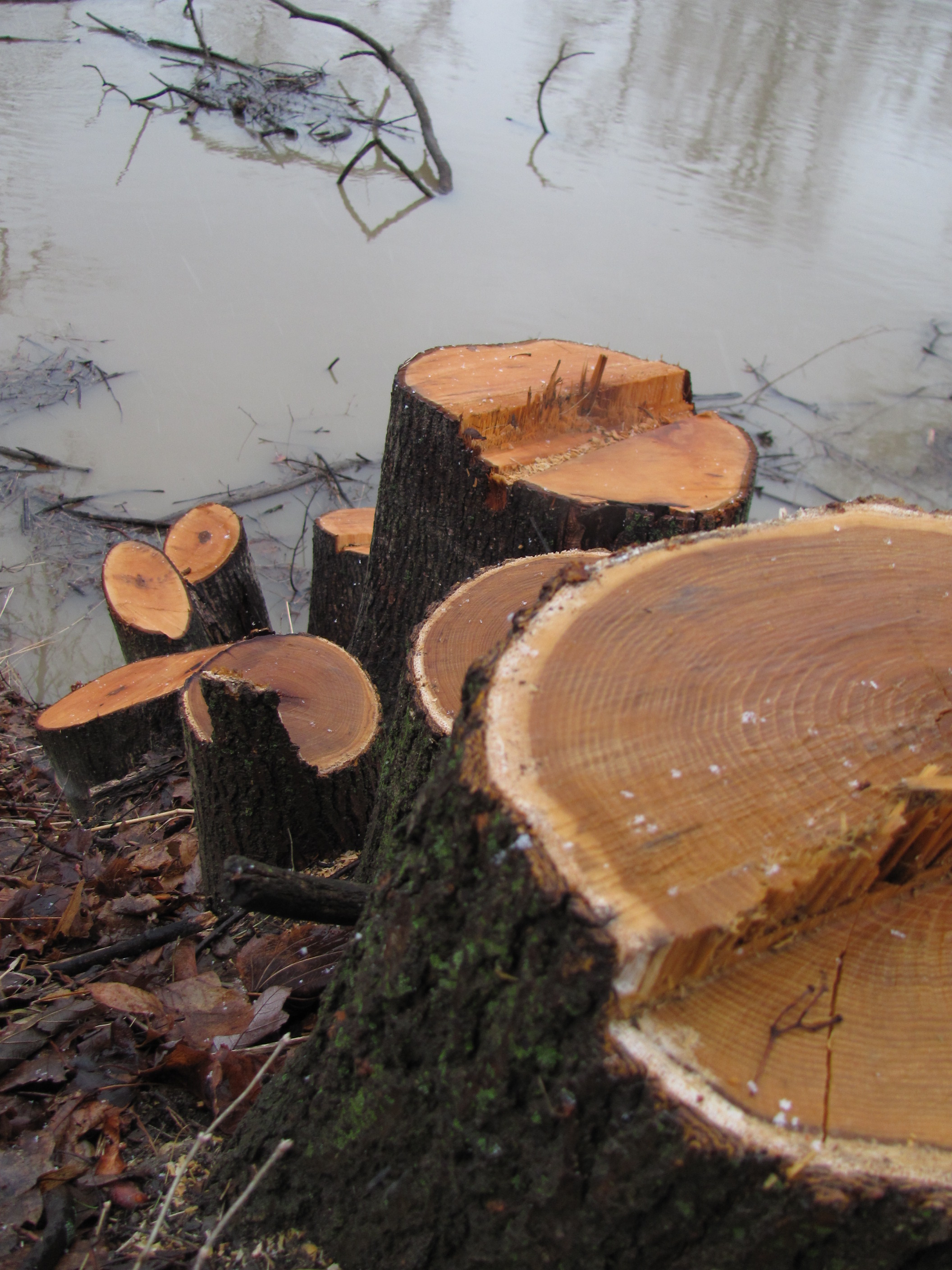
3. Leave Trees: If a tree falls into the water leave it! They provide great habitat and contribute to the important carbon budget of the ecosystem.

4. Maintain Septic Systems: Failing septic systems can leach nutrients, which cause nuisance algae and plant growth.

5. Control Erosion: Stabilize shoreline erosion with bioengineering methods best management practices.

6. Join Forces: Support your local lake or river associations; they implement important resources protection projects and programs…like Save Maumee!

7. Stow Away: Store boats, boat hoists, docks and other equipment away from the shoreline; they can harm shoreline plants and compact soils.  Work on these machines and engines AWAY from the water to reduce leaks and spills.

8. Flow Away: Stormwater from driveways, roof tops, and other surfaces carries harmful pollutants.  Direct stormwater away from the street grates and allow it to infiltrate into the ground. (i.e. raingardens, rainbarrels, porous cement, wash car on lawn instead of driveway etc.)

9. Appreciate Aquatic Plants: Nearshore aquatic plants (growing in the water) are an important part of the lake and river ecosystems.  They offer valuable habitat and buffer wave energy.  See here for details: http://blog.savemaumee.org/2010/11/22/how-does-planting-trees-and-grasses-help/

10. Know the Law: Familiarize yourself with local, state, and federal regulations.  Permits are needed for some shoreline activities; be aware if any of your future plans require one.  Also, check to see if your county/municipality has a greenbelt ordinance.

11. When in Doubt? Call it Out: Hold government and corporation entities responsible!  Take a picture of laws that appear to be broken.  Send it to us! abby@savemaumee.org OR CALL Katie Englin at IDEM complaint hotline for immediate remediation: 317-232-4464

Day at the Maumee Bay / Lake Erie

The following is information the Erie Port Authority passed out to participants attending “A Day at the Bay” hosted by the  Upper Maumee Watershed Partnership.

 Maumee River:

  • Largest body of water emptying into the Great Lakes
  • 150 miles long
  • Shares water with the St. Marys River, St. Joseph River, Auglaize River, Little Auglaize River, Blanchard River, Tiffen River, Ottowa River

Maumee Watershed:

  • 6,586 sqare miles in Indiana, Ohio & Michigan
  • 4,000 miles of streams
  • Drains 4 million acres
  • 1.7 million people live in the watershed
  • 327 named streams
  • Supports 94 species of fish
  • 90% of Ohio’s wetlands have been drained or filled in

Great Lakes states’ 500 square miles of parking lots threaten water quality, walkability

http://greatlakesecho.org/2010/06/17/great-lakes-states-500-square-miles-of-parking-lots-threaten-water-quality-walkability/       Great Lakes Echo -  June 17, 2010

http://www.utilitieskingston.com/Images/BypassSources.jpg

People ask me all the time about CSO’s / SSO’s (Combined  Sewer Overflow / Sanitary Sewer Outfalls).  Did the city plan poorly for our sewers? Why would 1/12th of an inch of rain cause all of our toilets and sinks water and stormsewers mix and discharge directly into the rivers, if the city/county were not to blame?  The answer is not that complicated like many others these days.  However, solutions are very expensive.

When Fort Wayne infrastructure was built around 1912 for our sanitary sewers (toilets) and stormsewers (the grates on the streets) they were two separate systems that were connected, toward the top, by a single pipe.  The sanitary sewers have a constant flow, the storm sewers surge with rain.  Since they are connected at the top with a smaller pipe, the mix of both pipes are released from the “outfall points.”  This pipe is a fail-safe type system, so when large rain events or flooding occurred, it would discharge into the waterways instead of coming up in your house.  This is not a bad idea, considering I am a homeowner as well.  SO ~ when built all those many years ago Fort Wayne, Indiana’s population was 52,057 in 1900 and 76,320 in 1912.  If you now count how many heads are flushing their toilets, that go to the same system that was built 100 years ago with some additions, the sewers are not able to process all that.  If you count the communities surrounding Fort Wayne that uses our “settling ponds” and infrastructure in 2010 …we are approaching 350,000 with the census numbers coming out soon.   Truly, the leaders of our city 100 years ago could not realize that the population would be so large and simply failed to plan accordingly.

Currently their are 42 CSO (Combined Sewer Overflows) or SSO (Sanitary Sewer Outfalls) discharge points locally, with 38 of those with permits allowing over 1 million gallons of water per day. These CSO’s are the combined “sanitary” (toilet water) and storm-sewer water are discharged out from these points with as little as a one-twelfth inch of rainfall or snowmelt.  In 2006 Save Maumee recorded 137 of these discharges.  Currently, the City of Fort Wayne reports on average 71 discharges per year and the Federal EPA (Environmental Protection Agency) allows 4 discharges per year.  Remember, what you flush down your toilet truly ends up in local streams. Be conscientious.

Pavement is one more component.  So in 1912 there were definitely not as many roads, sidewalks, driveways or roof tops.   Precipitation had a chance to “soak-in” rather than “run-off”.  The natural process of filtration through grasses (NOT the mowed kind) and trees allowed the water to release slowly and filter through ground water.  Now, when it rains the water is shed by running over pavement, picking up contaminants and loose soil.  It rinses off the oil, antifreeze, salt, lawn chemicals etc. and is quickly discharged into storm-sewers and is shed as fast as possible into nearby rivers and tributaries.  New stats from this Great Lakes Echo article discusses too much pavement stresses nearby streams.  Too much pavement and fast drainage and not enough productive green space may be topics of preponderance for the next 100 years.