You are currently browsing the archives for the Indiana Waterways category.
- Blue Green Algae (5)
- Chemicals in YOUR water (10)
- Coal's Contribution to Water Probs. (8)
- Factory Farms (CAFO) (3)
- Fishing Industry (6)
- Fluoride (2)
- How Fort Wayne (11)
- IN affects Great Lakes (13)
- Indiana Waterways (14)
- Links to Information YOU should know (3)
- Lobby for Clean Water Act (13)
- Local Pollution Story (17)
- Map (2)
- Mercury (3)
- Plants/Trees and Sustainable Planting (8)
- Save Maumee Update (9)
- SM in the News! (16)
- Uncategorized (41)
- World Water (3)
- WRITE NOW! (6)
- 11. February 2012: Combined Sewer Overflows - college term paper
- 1. February 2012: Rivers Causing Illness to Recreationists
- 21. January 2012: Killing waterways won't revive the economy
- 12. January 2012: Meetings Recap of LaFarga Copper LLC (Steel Dynamics Inc.)
- 29. December 2011: 2011 Tribute to our local Rivers
- 23. December 2011: "FortWayne.com" coverage of Save Maumee's Award
- 7. December 2011: Save Maumee Grassroots Org. wins "Organization of the Year Award"
- 28. November 2011: River Network explains the Clean Water Act
- 20. September 2011: IDEM Public Comment Letter for Steel Dynamics Inc. new copper plant
- 20. September 2011: Citizens' Questions that NEED to be Answered
Archive for the Indiana Waterways Category
Rivers Causing Illness to Recreationists
1. February 2012 by admin.
Hello All,
I spoke to Julie Horney today and she gave me a different perspective about our efforts. Julie became ill with Hepatitis, Thrombocytopenia, hepatomegaly (eventually causing Anemia) - probably due to E. coli - within 24 hours of her contact with our rivers. There needs to be a face that represents the problems we face with our river conditions…enough to cause illness! Her contact with the water is causing her weakness and sickness months later, and still to this day ~ no medication to help, only living through the illness she contracted due to contact with our local waterways! So who is is the responsible party for her illnesses? City? County? DNR? Julie wants postings at all entry points to waterways; as to the hazards of using the waterways for recreation. I wanted to share her story with you. ALL of us need to be aware of the dangers of our local waterways! If you think that our rivers in Indiana are disgusting, your natural resources are being robbed from you. Thank you for reading her story! ~ Abby
Baby don’t fear the . . . cyanobacteria!
If the “wind, the summer, the rain” were present that fateful Tuesday evening like it is in the famous rock-n-roll song from the 70s, well then I might not be sick right now! Let me explain:
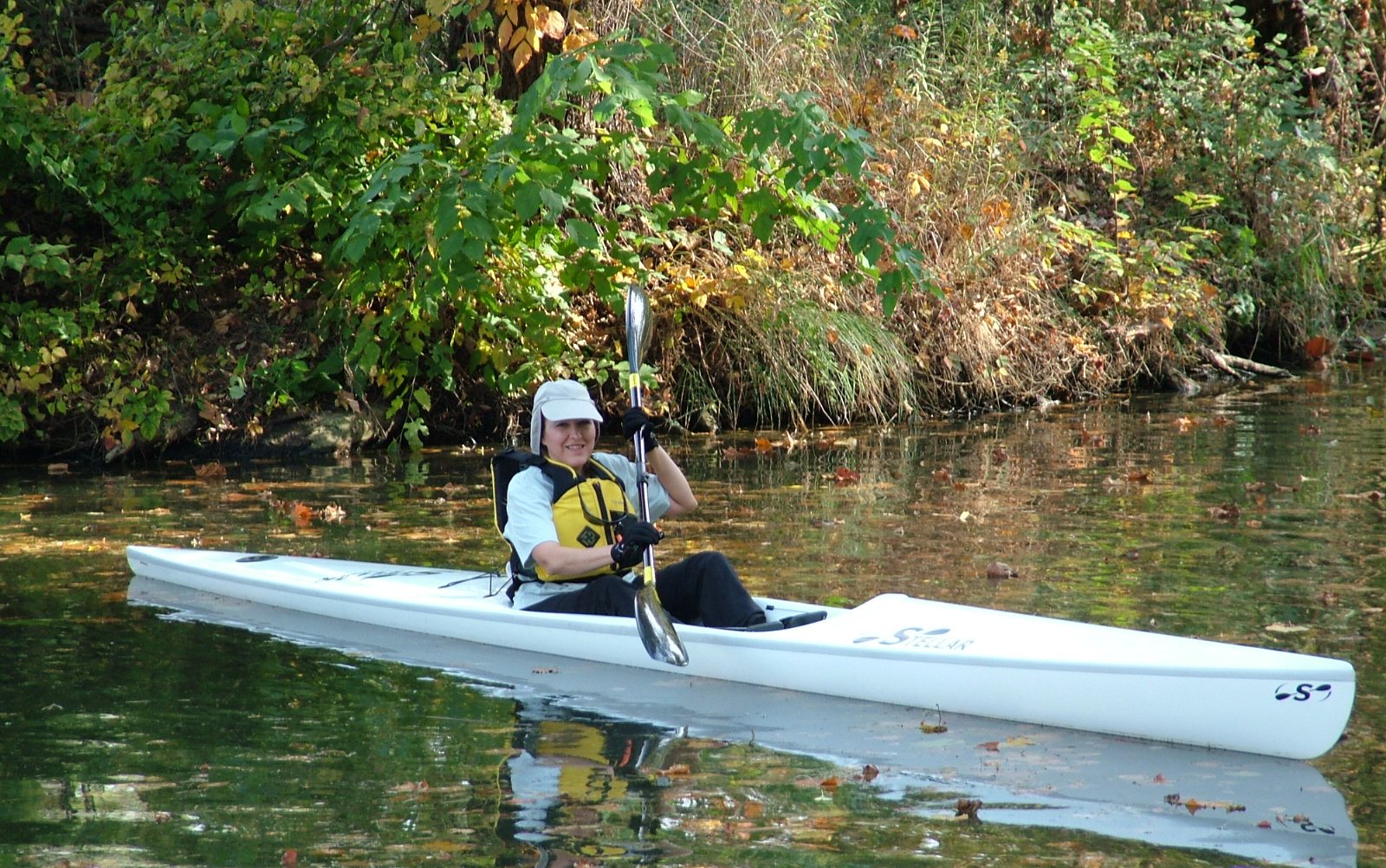
October 11th was a beautiful Fall evening for the Fort Wayne kayaking group to enjoy the Cedarville Reservoir. The Reservoir is in Leo, Indiana and north of the dam that divides the St. Joe River as it flows south to Fort Wayne. My last paddle in the Reservoir was over a year ago in the middle of the summer. About 2 miles north of the dam is the Leo boat launch from which my husband often completes his race practices. The group launched at the same place that night, headed southwest instead of north, in water that looked as murky as it always did. We noted nothing unusual, that is, no scum or smell, except maybe it was a little greener.
Greener, indeed! We ended the evening with our usual homemade cookies from one of our older regulars, chatted a bit, loaded up, and headed home. By morning, I was feeling ill! Within a day I was doubled over in pain, sick with diarrhea, fighting a headache and concerned I might have caught the flu. Fortunately I was able to see my doctor on Thursday. who suspected otherwise. The nausea medication gave some relief but the pain persisted and my breathing had become shallow periodically over the next 12 hours. My doctor saw me immediately after I called his office on Friday, ordered some tests and my husband Steve and I were off to the emergency room for more tests and treatment. I had become dehydrated and no one knew for sure what was going on.
I was crying out to the Lord for relief. IV pain medications and nausea medications began to manage the symptoms. The nurse practitioner suspected viral hepatitis and I was discharged home. Thrombocytopenia and hepatomegaly were later added to the medical record. I learned later that for the hepatotoxicity which caused the hepatitis, “supportive therapy” is all that is recommended: defined as emergency life support in its various forms if needed. Gratefully, I did not need that! But a few days went by and I couldn’t eat much, nausea and new symptoms settled in, and I just wasn’t convinced I was getting any better. Steve suggested I try to find a special diet or something that could help me. He was right.
Thank God for the internet! Google and Google Scholar became my constant companions. I propped myself up in front of the computer in between naps and began searching for answers. By this point I had become suspicious of the water in the Reservoir and looked for whatever data I could find on the Fort Wayne Rivers, Indiana water quality reports, etc. Then I found it. In the middle of a 2005 report on Indiana Lakes and Reservoirs was a chart of Cyanobacteria toxins, organisms, acute effects mechanisms of action, and signs and symptoms of intoxication. I found a list of the exact symptoms I had experienced. In the “Therapy” column was a note, “Not well investigated.”
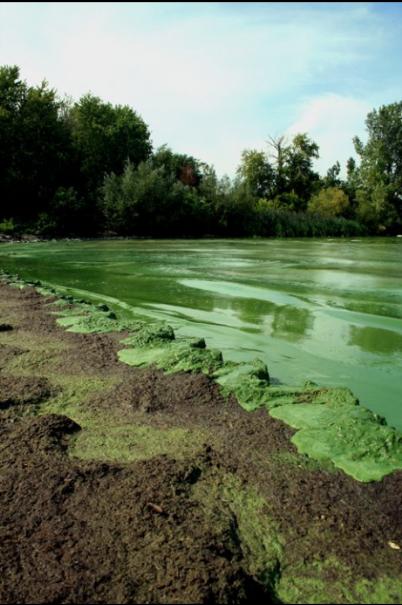
There must be more information somewhere. Cyanobacteria is also known as blue-green algae. According to the Centers for Disease Control, it “grows in any type of water and are photosynthetic (use sunlight to create food and support life). Cyanobacteria live in terrestrial, fresh, brackish, or marine water. They are usually too small to be seen, but sometimes can form visible colonies, called an algal bloom” (p. 1, from www.cdc.gov/hab/cyanobacteria/facts.htm). The blooms can be bright green, brown, red, or may not affect the appearance of the water at all. “As the algae in a cyanobacterail bloom die, the water may smell bad” (p. 1). The organisms are commonly present in the water in the early Spring and early Fall. Given the mild Fall we were having, the slow current of the St. Joe, and absence of a recent rainfall, I wonder if we were still in the “early Fall” conditions right for cyanobacteria. We were paddling in partly shallow waters, perhaps warmed by the sun.
Briefly for paddlers, we can be exposed to the chemical substances that cause a toxic effect by:
- Drinking water from a lake or reservoir with CyanoHB (the type that threatens people and animals), including accidentally swallowing the water
- Drinking untreated water
- Engaging in recreational activities in waters with CyanoHB
- Inhaling aerosols from water-related activities (jet-skiing or boating)
- Inhaling aerosols when using the water around the home
- Entering through a person’s skin who has a cut or open sore
Symptoms of infection vary with the specific parasite ingested and can take hours or days to show up in people or animals. Although I had an acute condition, I wondered where I could find information on any research-based alternative medicine or dietary approaches to hepatitis. The American Liver Foundation had the best, most balanced information so I changed my diet immediately. I started getting another measure better. Since I am not an expert, I won’t go into the details of some other measures that are helping. Gratefully, a local pharmacist at a compounding pharmacy was willing to do some research and instructed me on which supplements to stop that I had been taking (to reduce the load on my liver). He and his colleague also made a few recommendations of two supplements to add based upon the limited research available.
At the time of this writing, I continue to improve daily. My doctor discontinued the body fluid precautions when my lab work showed improvement, easing things around the home. My endurance and respiratory capacity are reduced yet improving. Since I work in health care, we will be cautious before releasing me to return to work. It is now too cold for this recreational paddler to consider getting back into the water anyways. I will have lots to think about this winter before returning to kayaking next year.
For example, I am not sure the exact mode that led to my exposure to cyanobacter and specifically cylindrospermopsin. A winged paddle increases splashing and a paddler gets wet as water flies through the air. Four of us kayaked with winged/racing paddles that evening and none of them, nor anyone else in the group, got sick. I had just purchased a beginner surf ski and was sitting in water for most of the paddle, soaking my skin with the possibly infected waters. Also, my water bottle did not have a tight seal around the mouthpiece and I tried to carefully extract a snack from its packaging with my (albeit wet) paddling gloves. Evidently, too many possibilities for exposure and I got sick.
The reason I am writing this article is to share with you the following precautions direct from the CDC (p. 2):
- Don’t swim, water ski, or boat in areas where the water is discolored or where you see foam, scum, or mats of algae on the water.
- If you do swim in water that might have a CyanoHAB, rinse off with fresh water as soon as possible. (This includes an accidental spill!)
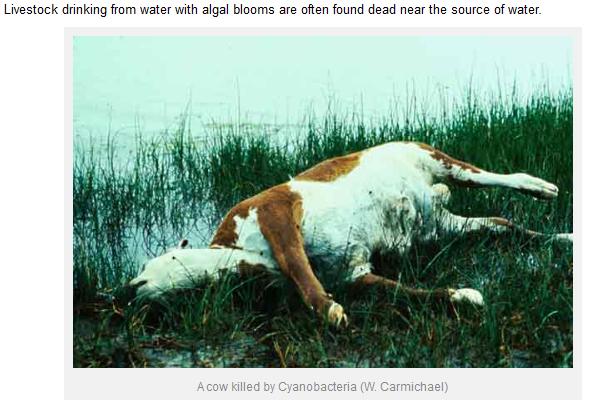
- Don’t let pets or livestock swim in or drink from areas where the water is discolored or where you see foam, scum, or mats of algae on the water.
- If pets (especially dogs) swim in scummy water, rinse them off immediately – do not let them lick the algae (and toxins) off their fur.
- Don’t irrigate lawns (or gardens) . . . with pond water that looks scummy or smells bad.
- Report any “musty” smell or taste in your drinking water to your local water utility.
- Respect any water-body closures announced by local public health authorities (as I had witnessed many times along the Chicago shoreline when I lived in Illinois).
Mary Jane Slaton of the Fort Wayne City Utilities adds that, after exposure to potentially infested waters, a person should use hand sanitizer before eating.
(Personal communication 10/25/2011).
Most importantly, remove yourself from the exposure and get medical attention right away if you think that you or your pet has been poisoned by cyanobacterial toxins. In the words of Ms. Slayton, “rivers (in particular) are natural water bodies. They sometimes have things (in them) that affect people’s health” (ibid).
While I agree, I also feel a responsibility to educate others more specifically on what to look for, what to do, and what not to do. It’s like the universal precautions we use in healthcare settings. Good hand washing prevents the spread of disease. I guess that now extends to our paddling equipment as well.
~Julie Horney
Posted in Fishing Industry, IN affects Great Lakes, Blue Green Algae, Indiana Waterways, Local Pollution Story | Print | No Comments »
Killing waterways won’t revive the economy
21. January 2012 by admin.
Toledo Blade Sunday, January 15, 2012
COMMENTARY
BY KRISTY MEYER
Some of our members of Congress evidently need a refresher course in clean water.
From the mid-1800s to the late 1960s, many rivers in the United States — including Ohio’s Cuyahoga River — caught fire because of uncontrolled dumping of pollution.
In the 1930s, algae blooms became a nuisance in the Great Lakes. The Ohio Department of Natural Resources concluded in 1953 that “long periods of pollution barriers to fish existed in the form of toxic material or deficient oxygen.” In the 1960s and 1970s, scientists declared Lake Erie biologically dead.
As a result, the U.S. and Canadian governments passed two historic pieces of legislation: the federal Clean Water Act and the Great Lakes Water Quality Agreement. Our lakes and rivers rebounded.
People flocked to Lake Erie and other waterways to fish, swim, and boat. Small businesses that depended on the lake’s fishery and water-based recreation flourished.
The number of coastal marine businesses along Lake Erie’s coast has more than doubled, from 207 in 1977 to 425 today. In 1975, there were 34 charter boat captains. Today, there are about 800 of these small-business owners.
The take-home message: Clean water yields good jobs and recreation. Yet many lawmakers now want to gut the Clean Water Act.
They want to stop any federal agency from protecting our waterways from increased pollution. These politicians claim they are acting in the name of jobs and the economy. They apparently think that clean water strangles employment and recreation.
According to the U.S. Environmental Protection Agency, nearly 90 percent of Ohioans get their drinking water from small or seasonal streams. Yet Congress is threatening to strip these streams of protections in place for 40 years under the Clean Water Act. If lawmakers abandon these streams, they become vulnerable to being filled and polluted.
Some of our leaders think that Americans must chose between the health of their families and the health of our economy. As a scientist, I know that life depends on clean air and water.
As a co-breadwinner, I know that my husband and children depend on a thriving economy. And as a mother, I am not willing to sacrifice the environment or my children’s health.
The Clean Water Act and Clean Air Act have helped Americans live healthier and longer lives. Yet Congress is placing our drinking water, our health, and our economy in its cross hairs.
Lake Erie and Grand Lake St. Marys are enduring toxic algae blooms that rival those of the 1970s. This is no time for Congress to roll back protections for waterways that provide drinking water, food, and jobs to millions of Ohioans.
President Obama should swiftly restore Clean Water Act protections to our streams, rivers, and lakes. His administration has started to define which waterways are legally considered waters of the United States, and thus afforded these protections. But big-money polluters and their friends in Congress are trying to stand in the way.
Now is the time for Ohioans to raise our voices to protect our waters. Don’t wait until you can no longer fish or swim in your favorite fishing hole.
Tell Ohio’s U.S. senators and representatives to vote no on any attempts to attack the Clean Water Act. Do it now — before it’s too late.
Kristy Meyer is director of agricultural and clean water programs for the Ohio Environmental Council in Columbus.
——————————————————————-
CLICK HERE TO FIND YOUR LEGISLATOR:
Posted in IN affects Great Lakes, Indiana Waterways, Uncategorized | Print | No Comments »
Meetings Recap of LaFarga Copper LLC (Steel Dynamics Inc.)
12. January 2012 by admin.
On January 12, 2012, the Allen County Drainage board had their beginning talks about reconstructing the Bandelier Ditch #3. Abby Frost-King and Celia Garza specifically requested from different contacts within the Surveyors office, to be informed of the day they would begin conversations. We were not called about this first meeting. They explained that this was only the introduction of the project and that there would be additional meetings. The Drainage Board meets the second and fourth Thursday of every month at 9:30am in the Council courtroom Suite 035 in the Garden level of Citizens Square. The next meeting will be January 26, 2012 at 9:30am. If they continue to speak and plan for this ditch improvement, it is imperative that we all attend to share our opinions…even though we have been informed that there will be a “public hearing” after the plans are in place and THEN the public who live in the area will be able to comment on their findings.
Save Maumee had attended the last Allen County Drainage Board meeting of 2011. We requested the review of the restructuring of Bandilier Ditch #3, since it seemed necessary to do this work before LaFarga Copper LLC (Steel Dynamics owned) is built on this partial floodplain. In addition, they would be required to install a retention pond on the property, to aid draining and storage of water. Originally, the “restructuring” of the ditch was, to our understanding, necessary for the new copper facility to be built. In previous meetings we understood that LaFarga was to pay for the restructuring of the Bandilier Ditch #3 and no plans had yet been designed.
Questions:
1) Who is paying to restructure Bandilier Ditch #3?
2) If it is Allen County citizens, why is the drainage board planning to restructure this ditch at this time…rather than 2 years ago, or next year?
The residents of New Haven have been in a state of unrest since Steel Dynamics Inc. announced their intention of moving a copper processing plant into the community. On April 27, 2011 officials of Omni -Source and Superior Aluminum held a meeting in which they spoke with residents about this investment. After listening to complaints from neighboring citizens, they realized the primary concern is a combination of pollutants coming from a new plant, as well as an existing plant (all owned by Steel Dynamics) called Superior Aluminum. A plant that neighbors have experienced previous problems with pungent odors and colorful metallic scented emissions. The EPA regulated ambient air monitors that determine pollutant levels to be compliant with the NAAQS (National Ambient Air Quality Standards) in Allen County are located 7.4-10 miles upwind of where the two plants will be located. This fact left little comfort to those that live within the area and whose health and property would be negatively impacted by additional emissions. Residents shared this knowledge with President Mark Milet and former CEO Keith Busse on October 18, 2011. They compromised by telling everyone at the meeting, they were going to install a spot light on the smoke stack for nighttime view and process monitors (which were described as being only video cameras). They also extended an invitation to the community to tour the new plant when it’s completed. At this time, a date has not been released for a tour of the new facility, and the company has not yet installed a spot light or video camera to their smoke stacks on Superior Aluminum.
An appeal has been filed on the air permit for the SDI LaFarga LLC copper processing plant. The hearings with the Office of Environmental Adjudication (OEA) began on December 19, 2011. Evidence will be presented and expert witnesses will appear at future hearings to ensure that the Indiana Department of Environmental Management (IDEM) properly reviewed and approved the air permit for the SDI LaFarga copper plant. Investigation will continue until the OEA comes to a verdict. For more information, or if you live in the area and want to become involved, please e-mail get.involved@live.com.
Posted in Save Maumee Update, Indiana Waterways, Local Pollution Story, Lobby for Clean Water Act, Uncategorized | Print | No Comments »
Save Maumee Grassroots Org. wins “Organization of the Year Award”
7. December 2011 by admin.
Awards Ceremony at The 4th Annual Greening the Statehouse Policy Forum will be held on Saturday, December 10th at Butler University’s Reilly Room at Atherton Union in downtown Indy from 8:30am-3pm. So join us for education from Indianapolis policy experts and environmental groups. For reservations call Jesse Karbanda at 317.685.8800 ext. 103
The Hoosier Environmental Council, Indiana’s largest environmental policy organization, has claimed “Save Maumee won Organization of the Year!” Abigail King, Ryan Bailey and Jain Young will be accepting the award for the group. Supporters of the day include Sierra Club, Blue Green Alliance, Carmel Green Initiative, Indiana Green Business Network, Indiana Recycling Coalition, Indiana Wildlife Federation, Save the Dunes, City of Indianapolis-Office of Sustainability.
Save Maumee has been chosen as a result of the positive impact on the community, the group’s great volunteer spirit, passion for the health of the rivers in the Great Lakes region, and ability to organize a number of very successful volunteer driven river clean-up and restoration events.
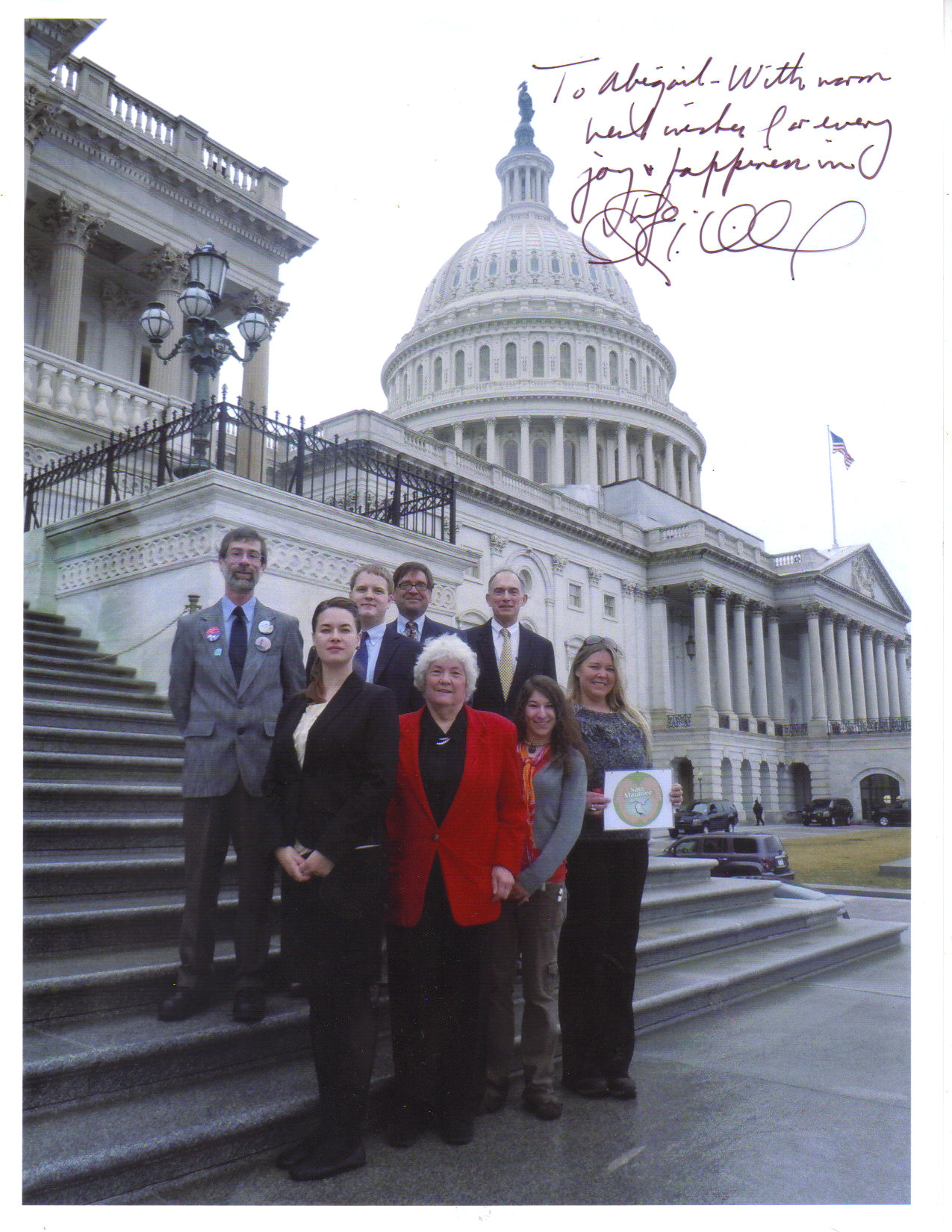
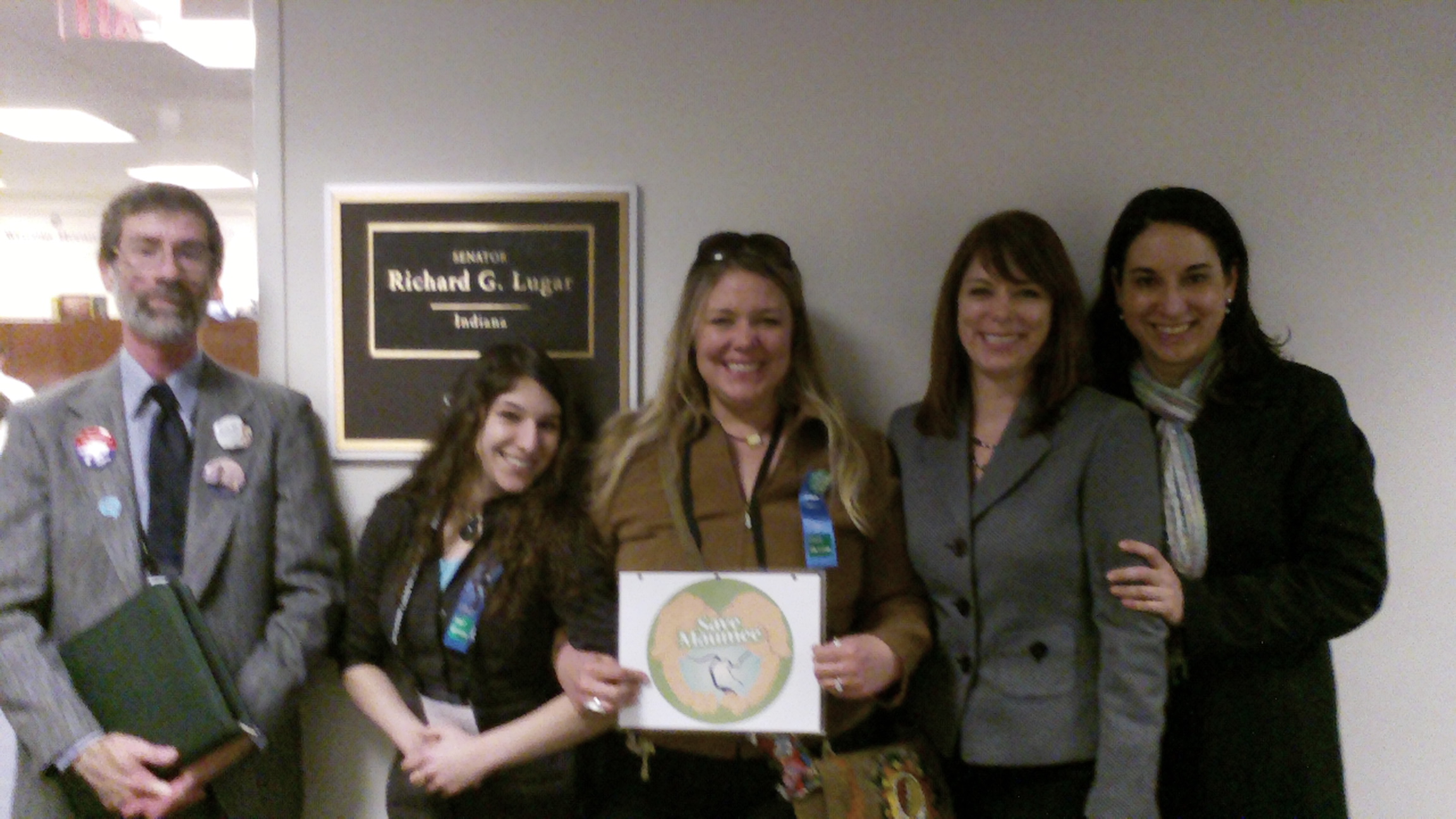
Northeast Indiana Rivers Represented in Washington D.C.
Save Maumee has been chosen by Healing Our Waters to represent Northeast Indiana for Clean Water Week during Great Lakes Days in Washington, D.C. The event will be held Feb. 28-29.
Every year, more than 125 citizens from Illinois, Indiana, Michigan, Minnesota, New York, Ohio, Pennsylvania and Wisconsin travel to our nation’s capital to educate public officials about the importance of the Great Lakes to the region’s economy and quality of life.
Needed Action for Congressmen discussion;
* Enforce current laws
* Support legislation that protects natural areas.
* Proper review of permits for corporations and stronger oversight and enforcement of permits. If fines are levied when a company discharges beyond allowed permit effluent, the monies can be utilized to truly improve water quality for human health.
* Indiana HB 1112 was passed and July 1st 2012 manufacturing waste (considered hazardous and illegal to discharge into the air or water), will now be added to soil and consider the soil to be “amended,” a.k.a. better than it was before.
* Tiles, straight pipes and National Pollution Discharge Elimination System (NPDES) outlets should be properly counted and available to the public on Indiana & Allen County GIS maps.
* Establish Total Maximum Daily Loads (TMDL’s) for the Maumee in Indiana, and complete the Upper Maumee Watershed Management Plan so the community knows the priorities of our waterways.
* Rules being developed by the Indiana State Chemist will regulate livestock waste as a fertilizer material, but do not take into account the pathogens in manure. It is important in disclosing information on when, where, and how much manure is land applied to Indiana fields, and note it will have allowances to spread manure on frozen fields. All this will allow more runoff into our waterways.
Save Maumee wants to see ALL people come together to improve the quality of Fort Wayne’s Three Rivers and thirty-four million that depend on the Maumee River, downstream. All these issues have workable solutions.
###
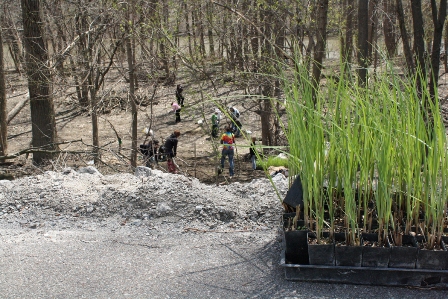
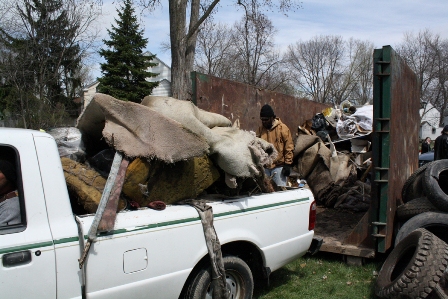
Save Maumee Grassroots Organization is dedicated to raising awareness about the conditions of the 3 Rivers in Fort Wayne, Indiana, while facilitating ecosystem restoration projects to improve water quality. Revitalizing the St. Joe/Maumee Watershed will protect and restore the environment, while improving the economic, aesthetic and recreational value. Research into historical importance of our navigable waterways and current pollution conditions began in 2001 and Save Maumee began bank-stabilization projects in 2005. To date Save Maumee has planted over 1,500 trees, 800lbs of native riparian seed and removed 22,000 lbs of trash on volunteer hours and in-kind donations alone.
Posted in IN affects Great Lakes, Save Maumee Update, How Fort Wayne, Indiana Waterways, Lobby for Clean Water Act, SM in the News!, Uncategorized | Print | No Comments »
IDEM Public Comment Letter for Steel Dynamics Inc. new copper plant
20. September 2011 by admin.
September 19, 2011
This letter is to be included for the public comment period on SDI LaFarga, LLC’s air permit #003-30250-00384
We believe there is a compliance violation with Steel Dynamics’ operation at Superior Aluminum located on 14214 Edgerton rd. (326 IAC 6-4 Rule on Fugitive Dust). We can provide video evidence to both the EPA and IDEM to prove the need for an investigation.
IDEM referred us to information about current and expected air pollution levels at http://www.in.gov/apps/idem/smog/ and directed us towards a map of the air quality monitors around the area. After digging for a time, I was unable to locate a map that showed anything but the monitors around nation. It is difficult to tell if the ones in our area are located in Allen County, IN. Our area of concern is around Edgerton, Ryan, Dawkins, Bruick, Harper, Roussey, Bremer, Berthauld, Webster, Parent, Slusher Roads, and US 24.
In the 326 IAC 2-1.1-5 it reads. The commissioner shall not issue a registration, permit, modification approval, or operating permit revision:
(1) would allow a source to cause or contribute to a violation of the National Ambient Air Quality Standards;
(2) would allow a violation of a PSD maximum allowable increase;
(3) do not assure compliance with all applicable air pollution control rules, except as provided by an enforceable compliance schedule; or
(4) are not protective of the public
(b) The commissioner may require any source to perform an air quality analysis to demonstrate compliance with the NAAQS (Air Pollution Control Board; 326 IAC 2-1.1-5; filed Nov 25, 1998, 12:13pm:22 IR 990)
We are formally requesting that the commissioner require that an air quality analysis be completed to demonstrate compliance. The current levels of emissions in this area are unknown by the EPA, IDEM, and the general public. This information should encourage the need for an air quality analysis so that EPA and IDEM will have a benchmark number to show current levels before the operation begins with LaFarga. These numbers can be used in the future to show an upward or downward trend of pollutants and confirm they are complying with NAAQS. We feel as though a new operation downwind from an existing polluter (Superior Aluminum Inc.) will contribute greatly to the current emission levels in the area of concern; this would not be protective of public health.
FESOP (Federally Enforceable State Operating Permit) reads under Source Definition; We are concerned this company only lists the following plants:
(a) SDI LaFarga, LLC is located at 1640 South Ryan Rd, New Haven, Indiana 46774, Plant ID: 003-00384; and
(b) Superior Aluminum is located at 14214 Edgerton Road, New Haven, Indiana, 46774, Plant ID: 003-00286
Steel Dynamics also has ownership of Omni Source, which is not listed as being part of the company. I would assume that if it was required for them to include Superior Aluminum as part of the company based on ownership, then Omni Source would also need to be included as being part of the company, listed under Source Definition.
————————————————————————————————–
SDI is paying out of pocket to move the Bandelier (#3) Ditch. The NEW ditch will begin on Dawkins Rd., run north on Ryan Rd. and moves east on Edgerton Rd. SDI chose to build LaFarga on and around a floodplain. Their watershed will be draining into the extended portion of the new ditch. This non-point source discharge into the ditch will then flow directly into the Maumee. This water is not being monitored. The Maumee River remains on the 303 (d) list for impaired waterways.
Save Maumee Grassroots Organization is concerned about the lack of NPDES permits and that Steel Dynamics Inc. (SDI / LaFarga LLC.)
According to data from EPA’s Permit Compliance System (as of December 2006), there are approximately 1800 major dischargers and 5000 total dischargers that have NPDES permit limits or monitoring requirements for total recoverable copper. There are over 400 major dischargers that have NPDES permit limits or monitoring requirements for dissolved copper.
Steel Dynamics has continually stated they will not be applying for an NPDES or any other straight pipe discharge permits. However, the quality of the water in Bandelier ditch (#3) will be seriously compromised if it is moved along side LaFarga, Superior Aluminum, Casad Depot, Pace Setter Finishing, and Plastics Materials of Indiana Inc. There will still be non-point source pollution and run-off water from all their impervious surfaces which will undoubtedly add trace amounts of toxic chemicals into the ditch which then drains into the Maumee River.
Until these issues are addressed with a formal investigation of Steel Dynamics Inc., to demonstrate compliance with all federal and state regulations and criteria, the company SDI LaFarga, LLC should not be considered for an air permit.
We would like IDEM to take serious reconsideration of the area chosen for this new operation. The ambient wind direction, SDI paying to move Bandelier ditch (#3), the impact of pollutants on the quality of water/air/soil around rural farm land and private wells, the current complaints levied against another SDI company, and the impact on the health of those who live near by and downwind, should all be taken into consideration when your final decision is made. I am requesting that you deny SDI LaFarga, LLC from obtaining an air permit.
SIGNED BY 23 people ~
Posted in IN affects Great Lakes, How Fort Wayne, Chemicals in YOUR water, Indiana Waterways, Local Pollution Story | Print | No Comments »
Citizens’ Questions that NEED to be Answered
20. September 2011 by admin.
On September 15th, 2011 IDEM held a public meeting to address the air permits being issued for Steel Dynamics Inc.
59 people were in attendance and spoke of fear of pollution from Superior Aluminum, and did not want to have air permits approved for the new LaFarga copper plant.
We have included the questions (below are citizens’ questions) that were NOT answered during this 4 hour meeting and we are requesting they are answered for the health of the public OR deny SDI’s air permit request.
AIR
- Who will watchdog any monitors that are placed? How often will they be monitored? (heavy metals, particulate matter, )
- How are we to be assured that SDI will conform to the Federal Clean Air Act?
- If these regulations are not followed, what is the consequence to the business?
- What fines are associated with non-compliance? public hearing/ legal action / law suit applicable?
- If a fine were levied, where would the money go?
- Can we test the air now BEFORE this plant goes up and then AFTER the plant is in operation if air permit is granted? (benchmark)
- If there is something in existence of what is upwind and downwind to monitor the air quality…so is it better/worse upwind/downwind?
- Where are the other monitors in existence around our area. The website given by IDEM http://www.in.gov/apps/idem/smog/ does not seem to contain specifics of location.
- If the current levels downwind exceed the NAAQS, will the permit be issued for the new plant?
- Can the combination of toxins from the SDI LaFarga Copper plant and the SDI Superior Aluminum Plant mix together to create something worse? Like a supertoxin?
- Were any exemptions awarded for any of the “6 criteria pollutants” or any others reported with IDEM and EPA?
- IF any exemptions were granted, what part of the process of the approval be challenged?
- What is the AVERAGE limit of air pollution LaFarga Copper plant expect to emit? How did they get their preliminary findings since this will be the “first copper plant of it’s kind, except for the one in Spain”? Who did the testing and were the tests paid for by SDI?
- If something technical or human error occurs, what backup system (in case of emergency) is in place to ensure no additional harmful pollutants will escape? What monitor would they have, if any, that would keep track of the number of emissions released during a break down, whether technical or human error?
- Where will the waste from the bag houses be deposited?
- Will any violations cause the exemptions to be revoked?
WATER
- How will relocation/expansion of the Bandelier Ditch (#3) affect the storm sewer/sanitary sewer?
- If any pollutants are being discharged into this ditch, what is being monitored or recorded and reported? Where will this information be available?
- Will their be a long term control plan for CSO’s where the sanitary /storm sewers are to be installed completely separate per the Clean Water Act and City of Fort Wayne Long Term Control Plan?
- Will SDI be responsible for testing runoff or non-point source pollutants from the two facilities that will be located .6 mile from each other?
- Will this plant will have a retention pond or a detention pond? CONFIRMING THERE WILL BE NO NPDES PERMIT?
- Where will the waste water from the bag houses be deposited?
- Does the pond fall under Rule 5 of the IAC 326 for surface water if there are no chemicals going into it? Where are the reports found for Waterways of the U.S.?
- Please submit the blueprint/schematics for the ditch/direction of the ditch for discharge into New Haven as a straight pipe OR to Fort Wayne Filtration Plant?
- How many gallons of water per month will be used at the new copper plant? Will the water be purchased from City of Fort Wayne or a well be drilled?
- There are 22 who have attended a local community meetings who are on wells within 3 miles of the plant. How will their well water supply be directly effected?
- Do you know the current levels of heavy metals in these wells?
- Where are the reports or monitoring that will test water quality upstream and downstream?
- How much water is used in the process of making 1 ton (2,000lbs) of steel? 1 ton of copper? 1 ton of aluminum?
SOIL
What are the current levels of Mercury and Lead in the soil surrounding the plant and the properties most affected by current emission.
Farm land and home owners properties must be included.
Posted in Fishing Industry, IN affects Great Lakes, Chemicals in YOUR water, Indiana Waterways, Local Pollution Story | Print | No Comments »
6th Annual Save Maumee’s EARTH DAY FUNNY VIDEO!
25. April 2011 by admin.
Well, we are considered a good natured bunch, with a sense of humor…
See our attempts at getting some nationwide attention! We gave a funny shout out to Ellen DeGeneres, John Stewart, Jimmy Kimmel, Steven Colbert & Oprah. We figured any media attention is good attention, even if it is a little tainted! We think that all the trash we pull out of our Three Rivers in Fort Wayne is ridiculous and wanted to share a little satire in our Earth Day efforts. We have been accused of being “rough around the edges and a little crass,” so we did not want to disappoint! Remember, we are a 100% unpaid volunteer group, so you get what you pay for! Dirty rivers, however, are no laughing matter. Let it be very clear though, we only want clean water, clean rivers and reduced pollution and we are willing to do something about it. It is one thing that brings us all to a consensus. Thank you for your continued support!
Thank you to everyone who make our events a complete success….AGAIN!
The first 30 seconds are specific to the celebrity, and the rest of the 2 minute video are basically the same.
Our official statistics for our 6th Annual Earth Day alone:
- 2 TONS of trash removed from our rivers & riparian area and floodways
- 480 Native Trees planted
- 150 lbs of approved DNR native seed planted
- 4,000 sq. ft. of erosion control mats installed
- $1,000 dollars worth of pre-grown plants (plant plugs)
- Raised awareness successfully for 322 men, women and children that attended our open non-house! THANK YOU!
Posted in IN affects Great Lakes, Save Maumee Update, How Fort Wayne, Indiana Waterways, Local Pollution Story, Uncategorized | Print | No Comments »
Save Maumee’s 6th Annual Earth Day Celebration
6. April 2011 by admin.
~ Save Maumee’s 6th Annual Earth Day 2011
~ SUNDAY April 17 ~ WE are here for the cause….CLEANER WATERWAYS AND AWARNESS
~ 11AM - 4PM ~

All Ages ~ Rain or Shine ~ Action & Education ~ Seed Planting & Large Scale Erosion Control Project ~ Free Fun
Open-Non House…working on improving your rivers with only citizen sponsorship and 100% volunteers since 2005! Looking for your back muscles!
See where to find the Earth Day fun CLICK HERE:
**Sign in and REGISTER FIRST and listen/read any information being presented about your rivers in Indiana - please sign the liability waiver, or you cannot participate. (just keeping the lawyers happy :))Save Maumee Grassroots Organization is dedicated to raising awareness about the conditions of the 3 Rivers in Fort Wayne, Indiana while facilitating ecosystem restoration projects; ultimately repairing and improving the St. Joseph, St. Mary and Maumee Rivers. Revitalizing the St. Joe/Maumee Watershed will protect and restore the environment, while improving the economic, aesthetic and recreational value. We are organizing hypothesis driven restoration projects, which place a high priority on monitoring, developing and restoring rivers with a positive environmental impact. Research into historical importance of our navigable waterways and current pollution conditions began in 2001 and Save Maumee began bank-stabilization projects in 2005 to begin the slow process of reversing years of pollution.
Watch our Earth Day Video from 2010!
What else has been going on?
*Tree removal on Fort Wayne riverbanks due to potential levee disturbance: Save Maumee’s Response
*Saints on the Streets in Fort Wayne supporting cleaner waterways by encouraging homeless to clean up their streambanks…Save Maumee is proud that other groups and excited to know that other groups are working for the cause.
* HR 872 passed in the House: This exempts pesticides users who spray over water from obtaining a Clean Water Act permit. It will allow our waters to be polluted with high levels of pesticides which will damage public health and the environment. This legislation is a disaster.
Grand Lake St. Mary’s died in Ohio, so how is land application of industrial waste products being passed in Indiana HB 1112? This will allow a variance from previously illegal land application of industrial waste products that were adopted by the water pollution control board for safety of citizens! Another article may explain why this bill has been introduced.
* Save Maumee & other environmental groups made it to Washington D.C. for 2011 Clean Water Week! - See what we said
* Save Maumee has created a Public Service Announcement, and eagerly await play circulation!
* Our Save Maumee Presented at the Dash-In: Sounds of Saturn & Les Nester and brought in enough money to buy an entire bag of Midwestern Prairie Grass @ $530 per acre - we will be placing this under the erosion control mats! Thank you everyone for making a GREAT evening with FREEBEE giveaways from: Green Dog, Neuhouser Nursery, Hall’s, Fort Wayne Outfitters/Bike Depot & Save Maumee goodies!
* Find out when the sewers discharge in Fort Wayne Rivers: To receive an alert email from City of Fort Wayne click here
* IF you think that The Maumee River is disgusting, this may give us a fresh perspective!
Other Happenings Around Town
April 29 through May 8th - BUY A PAIR OF SHOES - Come on in to Fort Wayne Outfitters / Bike Depot and buy a pair of Patagonia Shoes! (rumored to be the most environmentally friendly shoes on Earth). These two businesses are donating proceeds from sales of Patagonia Shoes to Save Maumee!
April 16 - Annual Eagle Marsh Clean-Up from 10:00am to 12:00pm
Meet at the Eagle Marsh barn for this annual clean-up to help remove litter from our restored habitats. Plants, wildlife and hikers will benefit. Please wear boots and bring gloves.
April 22 - Earth Day Tree Planting from 3:30pm to 4:30pm -
Meet at the Eagle Marsh barn. A tree planting at the largest habitat restoration project in the area is a wonderful way to spend some time on Earth Day. Join us to plant native trees and shrubs at Eagle Marsh. Please call 260-478-2515.
April 27th - Community-based Green Infrastructure FREE public webinar, you can use Save Maumee as your watershed group!
Register here
April 29 - Arbor Day Tree Planting at Eagle Marsh from 4:00pm to 5:00pm
Senator Richard Lugar is sponsoring a tree planting at the largest habitat restoration project in the area to celebrate national Arbor Day. Plant native trees and shrubs in areas at Eagle Marsh. Please call 260-478-2515 or email b.yankowiak@lrwp.org if you will be bringing a group or if you are interested in being a team leader.
April 30th & May 1st - Sol-Fest at Fox Island – Celebrating the outdoors with food, music & sun. If you want to participate in the fun or run a booth. Check it out http://allencountyparks.org/parks/fox-island/sol-fest-2008/
3rd Tuesday of every month - Green Drinks is looking for someone to organize Fort Wayne Green Drinks! Please email Julia Gorrel at greendrinksfortwayne@gmail.com or 260.418.0071
June 25, 2011 - Riverfest on the banks of the St. Joe at IPFW! Fun includes sea plane & water ski show, pontoon/kayak/canoe trips, fireworks, live entertainment on the rivers. Come & Celebrate the positive things about our rivers! - Steel Dynamics Inc. is title sponsor for RiverFest, sitting at the table with Save Maumee we look forward to the transparancy of business practices improve the health and wealth of our rivers! Call Dan Wire (260) 580-7415 to get involved or check out://ipfwriverfest.org/
September 17, 2011- Save Maumee’s 5th Annual Canoe Clean Up, Can YOU Clean Up?
11am- 4pm Free canoes from Fort Wayne Outfitters Bike Depot with ID. Spend a fun day with family and friends on the river cleaning up and educating yourself! Canoe Clean-Up Details HERE
October 4 OR 24, 2011- Save Maumee’s 4th Annual Seed Harvest at Fox Island Nature Preserve 1pm - 4pm, exact date to be announced depending harvesting availability. Seed Harvest Details HERE
===============================
Why Save Maumee chooses Earth Day?
“So long as the human species inhabits the Earth, proper management of its resources will be the most fundamental issue we face. Our very survival will depend upon whether or not we are able to preserve, protect and defend our environment. We are not free to decide about whether or not our environment “matters.” It does matter, apart from any political exigencies. We disregard the needs of our ecosystem at our mortal peril.” ~
~~U.S. Senator & Congressman Gaylord Nelson ~ Earth Day Founder [EPA JOURNAL, April 1980]
Our group is citizen driven only and 100% volunteer.
Thank you for your interest and caring about our local waterways! We ALL live downstream!
www.savemaumee.org
blog.savemaumee.org
Facebook - OUR NEW PAGE!
Twitter
A Greener Indiana
Posted in Links to Information YOU should know, Save Maumee Update, Indiana Waterways, Local Pollution Story, SM in the News!, Uncategorized | Print | No Comments »
More Trees Removed Along Riverbanks?
1. April 2011 by admin.
Levee Tree Removal in Fort Wayne
It has recently come to the attention of Save Maumee that trees along the Maumee River and St. Mary’s River are indiscriminately being cut down by order of the Board of Public Works by orders of the US Army Corps of Engineers. Apparently, this area of the riverbank lies on a levee and during one of the last big floods in Fort Wayne, the riverbank and the trees fell into the water. The U.S. Army Corps of Engineers is in charge of regulating levees by setting the safety guidelines and according to city planners, the US ACE directed the city to “remove the trees and make repairs or lose the acceptable rating of flood protection.” This has resulted in the removal of hundreds of trees along the riverbanks of the Maumee River - in addition to trees removed from the St. Mary’s and St. Joe Rivers as well.
Straight from the Board Of Public Works
“Officials in Fort Wayne say there should be no trees cut down along the city’s flood levees because there aren’t any. The levees here were built by the corps in the 1990s, and the only trees near a levee are on the river side of the structure, where they slow the current and help stabilize the levee. ‘Every year, (Army Corps inspectors) walk every inch of those levees,’ said Bob Kennedy, city public works director. Kennedy said the tree prohibition was issued by the corps in 2007, so any trees that needed to be cut down would have already been spotted and removed.”
Fort Wayne Journal Gazette, 6/14/09.
Well Mr. Kennedy, you ARE cutting down trees, hundreds of them in the past 3 weeks. Save Maumee recognizes the importance of levee safety and does not dispute that the city needs to be able to assess and observe the levees and keep our homes safe from floods. We also recognize that the rivers are filthy; contaminated with E. coli, Mercury, PCB’s, nutrients, phosphorous, sewage, garbage and general pollution - and we do not see the city working to correct or repair any of these issues; aside from a federal mandate to separate the sewer and storm drains, which should have been started 20 years ago. In the world of water, vegetation coexists along rivers. The vegetation holds soil in place when water rises and falls. Native plants with long taproots prevent soil from being washed downstream, filter water, attract diverse species of birds and insects, slow down and absorb water as it moves quickly through the banks during times of flooding and high water, while providing shade that increases Dissolved Oxygen in the water for wildlife. Removal of that vegetation increases soil erosion. Removal of vegetation is another reason streambanks to fall into the river.
Tree removal and stump grinding has been a hot discussion topic around town. Between Ash Trees being removed due to the Emerald Ash Borer invasion (equaling 24% of the tree canopy in Fort Wayne) and the Oak Trees being eaten by the Gypsy Moths; no tree is sacred from removal or damage. Now trees are being removed due to “potential levee disturbance.” According to a former employee of the Corps Engineer and Research Development, “There has never been a documented problem with a tree.” (MSNBC- Associated Press 6/9/2009) “The literature on the presence of vegetation indicates that it may actually strengthen a levee,” said Andrew Levesque, senior engineer for King County Washington. Yet, the mowing down of trees in Fort Wayne, never seems to end. The city has no plans to replace the trees elsewhere, except in mowed city/county parks, and does not see a problem with tree removal. (Board of Public Works, April 2011)
Hurricanes breaking levees and the affects in Fort Wayne, IN?
Tree removal on levees has been an ongoing problem around the country since Hurricane Katrina blasted through New Orleans, destroying the levees built to protect the city. Recognizing that part of the issue in New Orleans, was the failing levee system, the US ACE has taken a fresh look at all of the levee systems in the U.S. They have compiled a list of blanket regulations that every city or county lying in a floodplain must follow. The US ACE tightened its regulations with specific criteria regarding structure safety and vegetation. But, they tightened their regulations claiming there is an understanding “that levee systems commonly share the same space as water conveyance and critical ecosystems and habitats, and that working with these interests is vital in effectively managing flood risks.” (Recommendations for a National Levee Safety Program; A Report to Congress from the National Committee on Levee Safety, 2009)
Yet Fort Wayne indiscriminately cuts trees out on entire riverbanks without planning to replace them anywhere - while our rivers get dirtier and turn into culverts.
What do citizens say?
Concerned citizens have contacted Save Maumee regarding the removal of these trees, filling in of flood plains (approving permits and failing to enforce fines), business vehicles leaking directly into storm drains, waste gates being open with water flushing out during times without rain, concern about removal of vegetation without plans to replant elsewhere along the river and the lack of city planning that coincides with increasing the water and ecological quality along the banks, along with other issues. In fact, we can be bold enough to say that our organization is working to correct more than a century of neglect, degradation, and abuse on the Maumee River in Fort Wayne and have yet to see others take an active approach to STOP pollution. We see the city cutting down trees, changing the structure of the rivers, and having a continued disregard for the community’s greatest natural assets - which also directly affects those downstream from us. And we (Save Maumee 100% volunteers) continue to pull tires, plastic, stoves, refrigerators, etc. out of the riverbanks while also planting the trees and vegetation that actually do some good. ALL of which has been DNR approved. The questions remain: 1) Who decides where these trees are removed? 2) Who is advising the board and the “experts” that have been consulted? 3) Who is footing the bill for this large scale project?
BEFORE AFTER
Army Corps issues tree chopping orders; Policy aimed at protecting levees draws fire from locals
The above article states that “Army Corps of Engineers are on a mission to chop down every tree in the county Columbia LA…but later settled on a few dozen.”
The corps eventually dropped the idea because of state wildlife officials complained that the policy would destroy habitat, and residents in Sacramento and elsewhere objected that it would turned the rivers into more than barren culverts. The corps eventually dropped the idea.
So why cut down every tree indiscriminately along the levees in Fort Wayne, IN?
Lawyers have sent a letter of inquiry into the massive tree removal along local riverbanks and we eagerly await the report. See it here: Request for Information
All this came about in the Army Corps of Engineers in 2006 due to Hurricane Katrina smashing the New Orleans levees in Aug. 2005 and now letters from ACE are making their way into local requirements. The Corps wants a way to protect levees, yet our riverbanks have nothing to do with a hurricane and the City of New Orleans being built below sea level and the levees bursting from the pressure of a violent ocean during a hurricane event. TREES had NOTHING to do with it!
One reason that city continues to have flooding issues may have to do with the land use. More than 85% of Indiana’s wetlands have been eliminated since the 1800s, and many forested wetlands have been lumbered for their high-value hardwood. More than five million acres of wetlands used to exist in the state, but just over 800,000 acres remain today. Our wetlands are nature’s kidneys and filtrate pollution as well. Water is more destructive than fire, if you keep it at bay in one part of a rip/rap levee area…it will find a way to meander somewhere else; that area may never have flooded before. Removing trees “may contribute to the erosion of the banks.” It definitely contributes to the fast rising and falling of water levels called flashiness. City planning remains to be poor, even though building previously on a floodplain was not this administrations mistake. The city/county continually ignores the importance of the ecological systems along the rivers, which also provides safety to the quality of the waterways, fish, birds, etc. Highlights of Plan-it Allen - Allen County’s Comprehensive Plan
An old wise man, spoke of an idiom. “Watch out for people who talk out of both sides of their mouth.” This means ~ To say different things to different people on the same subject, in order to appease the one with whom you speak. Save Maumee uses the old cliche’ to point out water issues…
Actions always speak louder than words.
Posted in Plants/Trees and Sustainable Planting, IN affects Great Lakes, How Fort Wayne, Indiana Waterways, SM in the News! | Print | 4 Comments »
FUN on Fort Wayne Rivers!
2. January 2011 by admin.
Happy New Year…2011 here we come! The Polar Bear Plunge on New Year’s Day has a great turn out in Fort Wayne! Check out the video! http://www.youtube.com/watch?v=GOfdDsDpS70&feature=autofb
Posted in Indiana Waterways, Uncategorized | Print | 2 Comments »