Hello All,
I spoke to Julie Horney today and she gave me a different perspective about our efforts. Julie became ill with Hepatitis, Thrombocytopenia, hepatomegaly (eventually causing Anemia) – probably due to E. coli – within 24 hours of her contact with our rivers. There needs to be a face that represents the problems we face with our river conditions…enough to cause illness! Her contact with the water is causing her weakness and sickness months later, and still to this day ~ no medication to help, only living through the illness she contracted due to contact with our local waterways! So who is is the responsible party for her illnesses? City? County? DNR? Julie wants postings at all entry points to waterways; as to the hazards of using the waterways for recreation. I wanted to share her story with you. ALL of us need to be aware of the dangers of our local waterways! If you think that our rivers in Indiana are disgusting, your natural resources are being robbed from you. Thank you for reading her story! ~ Abby
Baby dont fear the . . . cyanobacteria!
If the wind, the summer, the rain were present that fateful Tuesday evening like it is in the famous rock-n-roll song from the 70s, well then I might not be sick right now! Let me explain:
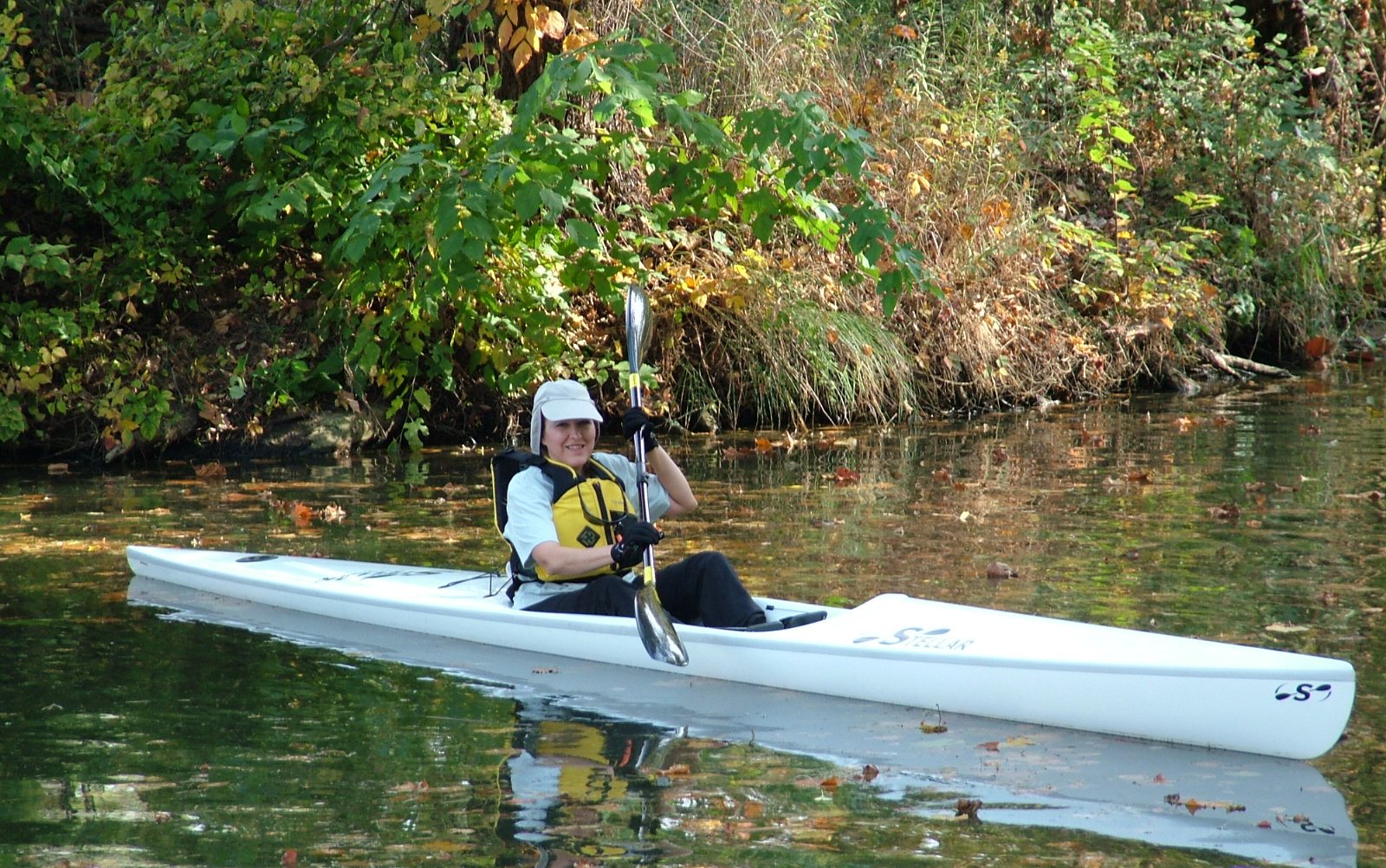
October 11th was a beautiful Fall evening for the Fort Wayne kayaking group to enjoy the Cedarville Reservoir. The Reservoir is in Leo, Indiana and north of the dam that divides the St. Joe River as it flows south to Fort Wayne. My last paddle in the Reservoir was over a year ago in the middle of the summer. About 2 miles north of the dam is the Leo boat launch from which my husband often completes his race practices. The group launched at the same place that night, headed southwest instead of north, in water that looked as murky as it always did. We noted nothing unusual, that is, no scum or smell, except maybe it was a little greener.
Greener, indeed! We ended the evening with our usual homemade cookies from one of our older regulars, chatted a bit, loaded up, and headed home. By morning, I was feeling ill! Within a day I was doubled over in pain, sick with diarrhea, fighting a headache and concerned I might have caught the flu. Fortunately I was able to see my doctor on Thursday. who suspected otherwise. The nausea medication gave some relief but the pain persisted and my breathing had become shallow periodically over the next 12 hours. My doctor saw me immediately after I called his office on Friday, ordered some tests and my husband Steve and I were off to the emergency room for more tests and treatment. I had become dehydrated and no one knew for sure what was going on.
I was crying out to the Lord for relief. IV pain medications and nausea medications began to manage the symptoms. The nurse practitioner suspected viral hepatitis and I was discharged home. Thrombocytopenia and hepatomegaly were later added to the medical record. I learned later that for the hepatotoxicity which caused the hepatitis, supportive therapy is all that is recommended: defined as emergency life support in its various forms if needed. Gratefully, I did not need that! But a few days went by and I couldnt eat much, nausea and new symptoms settled in, and I just wasnt convinced I was getting any better. Steve suggested I try to find a special diet or something that could help me. He was right.
Thank God for the internet! Google and Google Scholar became my constant companions. I propped myself up in front of the computer in between naps and began searching for answers. By this point I had become suspicious of the water in the Reservoir and looked for whatever data I could find on the Fort Wayne Rivers, Indiana water quality reports, etc. Then I found it. In the middle of a 2005 report on Indiana Lakes and Reservoirs was a chart of Cyanobacteria toxins, organisms, acute effects mechanisms of action, and signs and symptoms of intoxication. I found a list of the exact symptoms I had experienced. In the Therapy column was a note, Not well investigated.
There must be more information somewhere. Cyanobacteria is also known as blue-green algae. According to the Centers for Disease Control, it grows in any type of water and are photosynthetic (use sunlight to create food and support life). Cyanobacteria live in terrestrial, fresh, brackish, or marine water. They are usually too small to be seen, but sometimes can form visible colonies, called an algal bloom (p. 1, from www.cdc.gov/hab/cyanobacteria/facts.htm). The blooms can be bright green, brown, red, or may not affect the appearance of the water at all. As the algae in a cyanobacterail bloom die, the water may smell bad (p. 1). The organisms are commonly present in the water in the early Spring and early Fall. Given the mild Fall we were having, the slow current of the St. Joe, and absence of a recent rainfall, I wonder if we were still in the early Fall conditions right for cyanobacteria. We were paddling in partly shallow waters, perhaps warmed by the sun.
Briefly for paddlers, we can be exposed to the chemical substances that cause a toxic effect by:
- Drinking water from a lake or reservoir with CyanoHB (the type that threatens people and animals), including accidentally swallowing the water
- Drinking untreated water
- Engaging in recreational activities in waters with CyanoHB
- Inhaling aerosols from water-related activities (jet-skiing or boating)
- Inhaling aerosols when using the water around the home
- Entering through a persons skin who has a cut or open sore
Symptoms of infection vary with the specific parasite ingested and can take hours or days to show up in people or animals. Although I had an acute condition, I wondered where I could find information on any research-based alternative medicine or dietary approaches to hepatitis. The American Liver Foundation had the best, most balanced information so I changed my diet immediately. I started getting another measure better. Since I am not an expert, I wont go into the details of some other measures that are helping. Gratefully, a local pharmacist at a compounding pharmacy was willing to do some research and instructed me on which supplements to stop that I had been taking (to reduce the load on my liver). He and his colleague also made a few recommendations of two supplements to add based upon the limited research available.
At the time of this writing, I continue to improve daily. My doctor discontinued the body fluid precautions when my lab work showed improvement, easing things around the home. My endurance and respiratory capacity are reduced yet improving. Since I work in health care, we will be cautious before releasing me to return to work. It is now too cold for this recreational paddler to consider getting back into the water anyways. I will have lots to think about this winter before returning to kayaking next year.
For example, I am not sure the exact mode that led to my exposure to cyanobacter and specifically cylindrospermopsin. A winged paddle increases splashing and a paddler gets wet as water flies through the air. Four of us kayaked with winged/racing paddles that evening and none of them, nor anyone else in the group, got sick. I had just purchased a beginner surf ski and was sitting in water for most of the paddle, soaking my skin with the possibly infected waters. Also, my water bottle did not have a tight seal around the mouthpiece and I tried to carefully extract a snack from its packaging with my (albeit wet) paddling gloves. Evidently, too many possibilities for exposure and I got sick.
The reason I am writing this article is to share with you the following precautions direct from the CDC (p. 2):
- Dont swim, water ski, or boat in areas where the water is discolored or where you see foam, scum, or mats of algae on the water.
- If you do swim in water that might have a CyanoHAB, rinse off with fresh water as soon as possible. (This includes an accidental spill!)
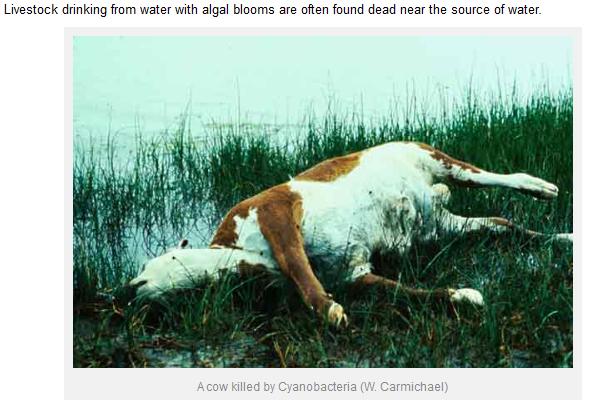
- Dont let pets or livestock swim in or drink from areas where the water is discolored or where you see foam, scum, or mats of algae on the water.
- If pets (especially dogs) swim in scummy water, rinse them off immediately do not let them lick the algae (and toxins) off their fur.
- Dont irrigate lawns (or gardens) . . . with pond water that looks scummy or smells bad.
- Report any musty smell or taste in your drinking water to your local water utility.
- Respect any water-body closures announced by local public health authorities (as I had witnessed many times along the Chicago shoreline when I lived in Illinois).
Mary Jane Slaton of the Fort Wayne City Utilities adds that, after exposure to potentially infested waters, a person should use hand sanitizer before eating.
(Personal communication 10/25/2011).
Most importantly, remove yourself from the exposure and get medical attention right away if you think that you or your pet has been poisoned by cyanobacterial toxins. In the words of Ms. Slayton, rivers (in particular) are natural water bodies. They sometimes have things (in them) that affect peoples health (ibid).
While I agree, I also feel a responsibility to educate others more specifically on what to look for, what to do, and what not to do. Its like the universal precautions we use in healthcare settings. Good hand washing prevents the spread of disease. I guess that now extends to our paddling equipment as well.
~Julie Horney